
Wasp Control in St. George, UT: Why Paper Wasp Queens Move Into Attics and Eaves in November
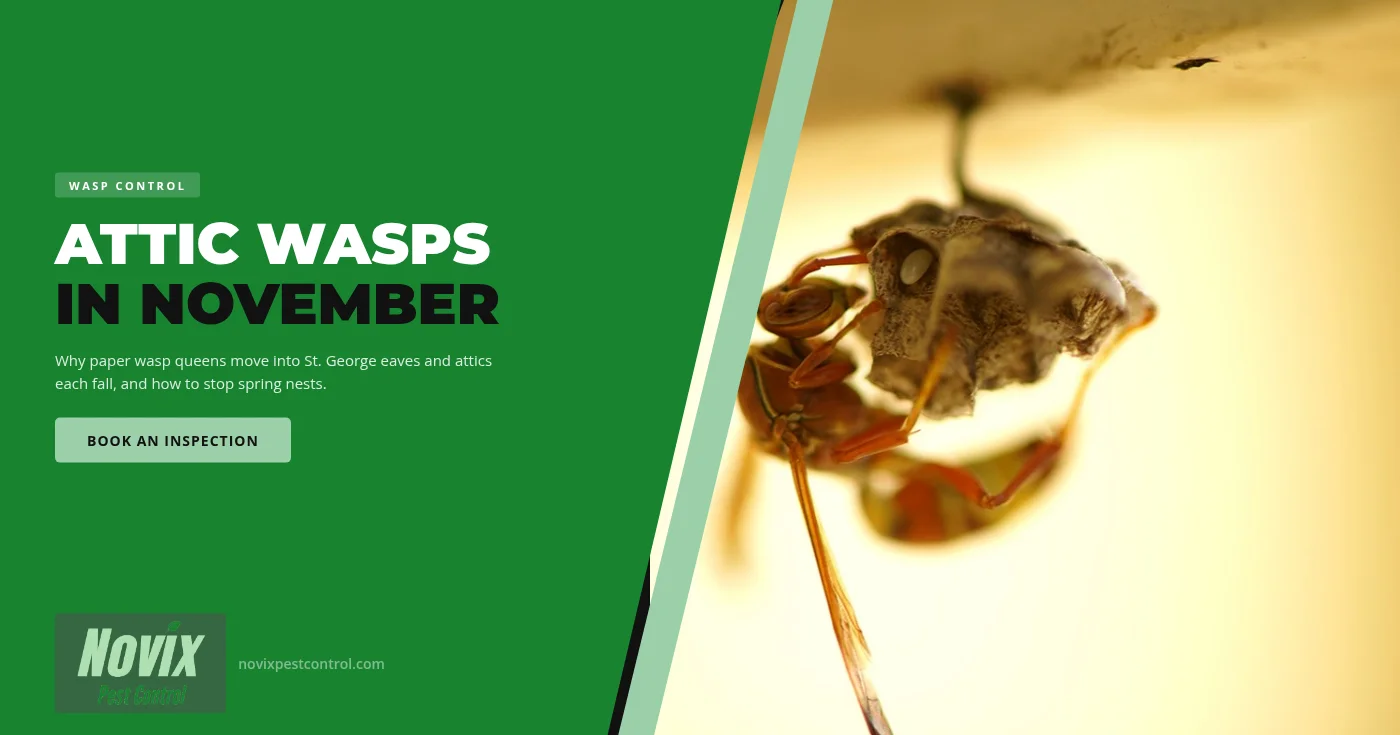
Wasp Control in St. George, UT: Why Paper Wasp Queens Move Into Attics and Eaves in November
You may have noticed a few slow, groggy wasps crawling across a window sill or circling a ceiling light this month and wondered where they came from. In most homes, the answer is right above your head. For anyone researching wasp control in St. George, UT, November is one of the most important and most overlooked times of the year. The wasps you see now are the queens that will build next spring’s nests.
As colonies wind down in late fall, workers and males die off. Newly mated paper wasp and yellowjacket queens then search for sheltered places to wait out the cooler months. Attics, eaves, soffits, wall voids and the gaps behind decorative shutters suit them perfectly. Here at Novix Pest Control, we see this pattern every year across Washington County, and it explains why so many homeowners find overwintering wasps indoors on mild afternoons.
In this post, we’ll explain why wasp activity shifts in November, where queens hide and what signs to watch for. We’ll also cover why warm days draw them inside, which fall exclusion steps stop spring nests and how professional treatment works.
Why Wasp Activity Changes in St. George Each November
Paper wasps and yellowjackets live in annual colonies. A single queen starts a nest in spring, the colony grows through summer, and by late fall it produces new queens and males. After mating, the new queens leave to find shelter. The old queen, workers and males die as food runs short and nights turn cold. According to university extension entomologists, including Penn State Extension, only these fertilized queens survive winter, and the old nest is not reused.
A Longer Season in the Desert
Our mild climate stretches that timeline. November afternoons here are often comfortable while nights turn much cooler, so colonies tend to linger later into fall than they do in northern Utah. Depending on the year, you may still spot yellowjacket workers around trash cans or patio tables in early November, even as queens are already settling into attics and wall voids.
The European Paper Wasp Factor
Utah also has an invasive species to contend with. The European paper wasp (Polistes dominula) readily builds nests on houses: under eaves, behind shutters, inside grill covers and along railings. Utah State University Extension has reported that it has displaced native paper wasps in many areas. Because this species lives so comfortably alongside people, its queens are especially likely to overwinter in the same structures where they were raised. That’s why fall paper wasp control matters so much.
Where Overwintering Paper Wasp and Yellowjacket Queens Hide Around Your Home
The two groups behave a little differently once the weather turns. Paper wasp queens frequently overwinter in buildings and often gather in small groups in protected cracks where temperatures stay steady. Yellowjacket queens more commonly spend the winter alone under loose bark, in leaf litter, inside rotting logs or in the soil, though some do end up inside structures.
Around homes in our area, the most common hiding spots include:
- Attics, especially near roof vents, ridge lines and insulation edges
- Soffits and eaves with gaps, damaged screens or loose panels
- Wall voids reached through cracks where stucco meets window and door trim
- The space behind decorative shutters and exterior light fixtures
- Openings in tile roofs, which are common on local homes
- Gaps around utility lines, vents and garage door frames
Stucco exteriors and tile roofs are popular in Washington County for good reason. Their seams and small openings, though, are commonly where we find wasps in attics and walls during fall inspections. A queen needs only a narrow crack to slip through, so even well-kept homes can host a few overwintering wasps.
These same protected gaps attract other pests too. Spiders often build webs in the same eaves and corners, which is why we frequently pair wasp work with spider pest control on fall visits.
Signs You Have Wasps Sheltering in Your Attic, Eaves or Wall Voids
Overwintering wasps are quiet guests, so the clues can be subtle. Watch for:
- Sluggish wasps crawling on window sills or walls, particularly on sunny sides of the house
- Wasps gathered around ceiling light fixtures, recessed lights or bathroom fans
- Dead wasps collecting on sills, in light covers or near the attic hatch
- Wasps going in and out of a soffit gap or roofline crack on warm afternoons
- Old, gray, papery nests under eaves or behind shutters, a sign that colonies lived on the property this year
- Several wasps appearing in the same room over a few days
Seasonal residents often notice these signs first. When a home has sat closed through summer and fall, it’s common to open it up in November and find wasps on window sills or clustered near skylights. A few dead wasps aren’t cause for alarm, but repeated sightings usually mean queens are sheltering somewhere in the structure.
Knowing which insect you’re dealing with matters, because treatment approaches differ. If you’re seeing fuzzier, golden-brown insects moving in a steady line to one opening, those are likely honey bees, and our bee removal service is the right fit.
Why Warm Southern Utah Winter Days Bring Wasps Indoors
Overwintering queens aren’t truly asleep. They enter a dormant state and stay mostly still, but warmth can rouse them. Southern Utah winters bring plenty of bright, mild afternoons after chilly nights, and a sun-warmed attic or wall can heat up enough to wake a queen long before spring. Sources don’t agree on one exact temperature that triggers this, but the pattern is familiar to anyone who has lived here a few winters.
Once active, a confused queen follows warmth and light. Instead of heading outside, she may move deeper into the house through gaps around recessed lights, ceiling fans, attic hatches and plumbing chases. That’s why wasps coming inside on warm winter days usually turn up in upstairs rooms, bathrooms and near windows.
Do Indoor Wasps Sting?
These queens are slow and rarely aggressive, so stings are uncommon. They can still sting if they’re stepped on, grabbed or trapped against skin. Keep children and pets away from them and avoid swatting with bare hands. For the occasional visitor, trapping it under a cup and releasing it outdoors works well.
Skip the Bug Bombs
It’s tempting to set off a fogger in the attic, but EPA guidance warns that total-release foggers can be a fire hazard near pilot lights and other ignition sources. They also don’t reach queens hidden inside wall voids and insulation, so they rarely solve the problem.
Fall Exclusion Steps That Stop Next Spring's Nests Before They Start
Every queen that survives winter can found a brand-new colony. In spring she builds a small nest and raises the first workers on her own, and by midsummer that nest may hold dozens of wasps or more. Preventing next spring’s nests starts with keeping those queens out of your home now.
Seal and Screen Before It Gets Colder
- Caulk cracks where stucco meets window frames, door trim and fascia boards.
- Screen attic, gable and soffit vents, and replace torn or rusted screens.
- Repair loose or damaged soffit panels and fascia.
- Replace worn weatherstripping on exterior doors and attic hatches.
- Seal gaps around utility lines, pipes, cables and exhaust vents.
- Check behind shutters and remove any empty nests you find.
Queens can squeeze through surprisingly narrow gaps, so if you’re unsure whether an opening is worth sealing, it usually is.
Plan an Early Spring Check
Exclusion won’t catch every queen, so a second line of defense matters. In early spring, walk your eaves, patio covers and shutters every week or two. A founding nest with only a few cells is far easier to handle than a full colony in July. Combining fall exclusion with spring nest checks is the most reliable way we know to keep paper wasps from returning to the same home year after year.
How Professional Wasp Control Works in St. George, UT
Here at Novix Pest Control, our process is built around finding where queens are sheltering and closing the door on next year’s colonies. Our licensed technicians and our in-house Associate Certified Entomologist bring years of experience with the paper wasps and yellowjackets common in Southern Utah.
What a Visit Includes
- Inspection: We check the roofline, soffits, attic access points, shutters, tile roof openings and stucco seams for activity and entry points.
- Targeted treatment: We apply professional products to the voids and cracks where overwintering wasps hide, with eco-friendly options available.
- Nest removal: We remove old and active nests from eaves, patio covers and other structures.
- Exclusion recommendations: We point out the gaps and damaged vents that should be sealed or screened.
- Spring advice: We recommend checking for new founding nests in early spring so they’re removed while still small.
For homeowners who want wasp removal in St. George handled quickly, we offer quick response times and same-day service options. The same approach covers yellowjacket control around patios and play areas, plus wasp nest removal across Southern Utah for commercial properties. Our work is backed by our Free Re-service guarantee: if wasps cause problems between services, we come back at no additional cost. Our money-back guarantee means that if we’re given enough opportunities and still can’t resolve the issue, we won’t charge for that service.
Frequently Asked Questions About Fall Wasp Control in St. George
Will the wasps in my attic build a nest next spring?
Possibly. Each fertilized queen that survives winter can start a new colony, and paper wasps often nest on the same building where they overwintered. Fall exclusion and early spring nest checks greatly reduce the odds.
Why are wasps in my attic in November?
November is when newly mated queens leave their dying colonies to find shelter. Attics offer stable temperatures and protection, which makes them a natural choice for overwintering wasps.
Why do I see wasps inside my St. George home on warm winter days?
Mild afternoons can warm attics and walls enough to wake dormant queens. They follow warmth and light toward living spaces, often entering through gaps around light fixtures, fans and attic hatches.
Can I knock down an old wasp nest in the fall?
Yes, once it’s truly empty. Old nests aren’t reused, so removing them is mostly about tidiness and peace of mind. Check carefully for activity first, wear gloves and long sleeves, and call us if you see live wasps on or near the nest.
Do fake nests or wasp traps work?
The evidence for decoy nests is limited and mostly anecdotal. Traps may catch some yellowjackets, but they won’t reach queens hidden in your walls or attic, so we don’t rely on them as a stand-alone solution.
Schedule Wasp Control in St. George, UT Before Spring Nests Start
The wasps you notice in November aren’t just a winter nuisance. They’re next year’s colonies waiting for warmer weather. Sealing entry points now, watching for founding nests in early spring and getting professional help when queens are already inside are the best ways to protect your home.
Novix Pest Control has served local homeowners and businesses since 2019, and our team brings long hands-on pest control experience to every visit. We provide reliable wasp control in St. George, UT and throughout Washington, Ivins, Santa Clara, Leeds, La Verkin, Springdale, Rockville, Hildale and Kanab. If you’re seeing wasps around your eaves or inside your home, contact Novix Pest Control to schedule an inspection. We’ll help you stop next spring’s nests before they start.
Who Can Help Me Get Rid of Wasps Before They Nest Again Next Spring?
We can. Here at Novix Pest Control, we focus on finding where overwintering queens are hiding and stopping them before they start new colonies in spring. Our team worked in pest control for many years before we started Novix in 2019, because we believed we could deliver a better level of service on our own.
When you choose us for wasp pest control, you can expect:
- Licensed professionals: We hold Utah state license 4000-2581 and are fully insured.
- Expert insight: Our in-house Associate Certified Entomologist helps us understand pest behavior and choose effective treatments.
- Fast service: We offer quick response times and same-day service options.
- Eco-friendly options: We offer treatment choices designed with families and pets in mind.
- Our guarantees: With our Free Re-service guarantee, we return at no additional cost if problems come up between services. Our money-back guarantee means that if we’re given enough opportunities and still can’t solve the problem, we won’t charge you for that service.
We serve homes and businesses throughout Washington County, including Washington, Ivins, Santa Clara and Leeds, as well as La Verkin, Springdale, Rockville, Hildale and Kanab. Our team speaks English and Spanish, and we accept credit card, ACH, cash and check. Reach out to our team to schedule an inspection and protect your home before spring arrives.