
Termite Inspection in Leeds, UT: Why Stacked Firewood Invites Termites Toward Your Home This Winter
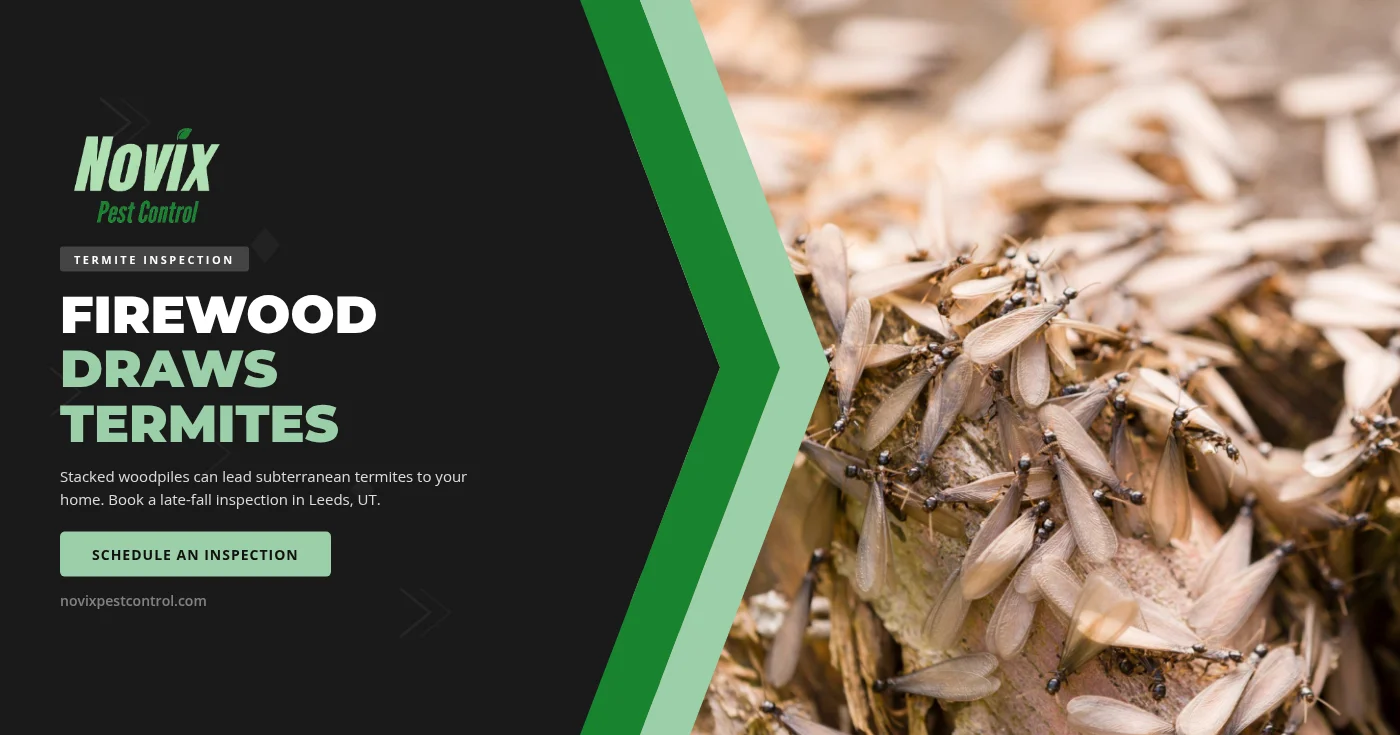
Termite Inspection in Leeds, UT: Why Stacked Firewood Invites Termites Toward Your Home This Winter
When November nights start dipping toward freezing, firewood starts piling up beside garages, fences and back porches across town. It’s a cozy seasonal ritual, and one that subterranean termites quietly take advantage of. If you’ve been wondering whether you need a termite inspection in Leeds, UT, the woodpile you just stacked is a good reason to think about it now.
Subterranean termites live in the soil, need moisture and feed on cellulose. A stack of logs resting on damp ground near a foundation offers all three. In our dry desert climate, those pockets of moisture and food stand out, and a woodpile against the house can shorten the distance between a hidden colony and your home’s framing.
In this post, we’ll explain why termites notice firewood, how they use it as a bridge, which warning signs to look for, how to store wood more wisely, what a professional inspection covers and why late fall is an ideal time to schedule one. Here at Novix Pest Control, we want you heading into winter with real peace of mind.
Why Leeds Homeowners Stock Up on Firewood Every November, and Why Termites Notice
November brings a noticeable shift to our corner of Washington County. Days often stay mild, but nights can turn cold, especially at the town’s higher elevation compared with St. George. That’s when wood stoves and fireplaces come back into use, and many homeowners order a cord or two, split their own wood or gather fallen limbs from larger rural lots.
The trouble is where that wood usually ends up. For convenience, it gets stacked as close to the back door as possible: against the siding, under an eave or along a garage wall. Often it sits directly on the soil, sometimes near a dripping hose bib or an irrigated flower bed.
From a termite’s point of view, that’s an invitation. Subterranean termites forage underground for cellulose, and they favor spots where the soil holds moisture. Desert ground dries quickly, so the shaded, damp soil under a woodpile stands out. The logs themselves are food, and the stack shields the ground from sun and wind, helping hold in moisture and some warmth.
None of this means every woodpile has termites. It does mean a stack placed against the house creates the conditions termites look for, right beside the structure you most want to protect.
How Subterranean Termites Use Woodpiles as a Bridge to Your Foundation
Subterranean termites rarely appear in the open. Worker termites need humidity to survive, so they travel through soil or inside protective mud tubes built from soil and saliva. These tubes, often about the width of a pencil, let them cross concrete, block and stucco without drying out.
A woodpile changes the equation. When logs rest on the ground, foraging termites can move up into the wood without ever leaving cover. If that stack leans against siding, a wood fence post or a deck support, it can act as a bridge, giving termites a protected route from the soil to the building that bypasses the open foundation surface where tubes would otherwise be easy to spot.
The stack also hides evidence. Tubes built behind a woodpile, or galleries chewed into the bottom row of logs, can go unnoticed for months because nobody moves the wood until it’s time to burn it. By then, workers may have found a crack in the slab, a gap around a plumbing penetration or wood trim sitting too close to the soil.
Wood-to-soil contact and excess moisture are widely recognized as conditions that attract termites, and a firewood stack against the house often combines both problems in one spot.
Warning Signs to Check for in Your Firewood and Along Your Home’s Exterior
In the Woodpile
When you pull logs for the fire, look closely at the bottom layers, which sit nearest the soil. Signs that deserve attention include:
- Soil packed into cracks or tunnels inside the wood, often running along the grain.
- Thin, papery or hollow logs that crumble more easily than they should.
- Small, pale, soft-bodied insects scattering when you lift a log. These are often worker termites, though other insects can look similar.
- Damp, darkened soil under the stack that never seems to dry out.
Along Your Home’s Exterior
Next, walk the perimeter of the house, paying extra attention to any wall where firewood has been stored:
- Mud tubes on foundation walls, stem walls, piers or the backs of steps.
- Bubbling or blistered paint on wood trim near the ground.
- Wood that sounds hollow when tapped, such as door frames, fence posts or deck framing.
- Discarded wings near windowsills or doors, usually left after spring swarms.
Spiders and scorpions love woodpiles too, so wear gloves and carry a light. If you notice plenty of eight-legged activity, our spider pest control service can help. If you spot termite signs, don’t break open the tubes or spray them yourself; leave the evidence in place so an inspector can assess it.
Smart Firewood Storage Habits That Reduce Termite Risk on Leeds Properties
Good storage habits won’t make a property termite-proof, but they remove some of the easiest opportunities. Here’s what we recommend:
- Get it off the ground. Stack wood on a metal rack, concrete pavers or a gravel base so logs don’t touch soil.
- Move it away from the house. Never stack firewood against siding, stucco, a foundation or a wooden fence. Keep your main supply as far from the structure as your lot reasonably allows, with only a day or two’s worth near the door.
- Cover the top, not the sides. A tarp on top sheds rain and snow, while open sides let air dry the wood and the ground beneath it.
- Watch your water. Keep woodpiles clear of sprinkler heads, drip lines, leaky spigots and air conditioner condensate lines.
- Burn the oldest wood first. Rotating your stock keeps logs from sitting in one spot for seasons at a time.
- Check wood before bringing it inside. Knock off soil, look for insects and bring in only what you’ll burn soon.
On larger rural lots, also look at other cellulose sitting on the soil: old lumber, fallen branches, landscape timbers and thick mulch beds against the foundation. Termites don’t distinguish between firewood and a forgotten pile of scrap boards. If you’re unsure what placement makes sense for your layout, we’re glad to walk the property with you and offer specific suggestions.
What a Professional Termite Inspection in Leeds, UT Covers
A homeowner’s walk-around is helpful, but subterranean termites are experts at staying hidden. A professional inspection is more systematic. Here at Novix Pest Control, our licensed technicians typically examine:
- The full exterior perimeter, including foundation walls, slab edges, stucco transitions, steps, porches and patios.
- Woodpiles, fences, decks and outbuildings, plus any wood in contact with soil.
- Garages and interior areas where plumbing enters the slab, along with baseboards, door frames and window trim.
- Crawlspaces and attics where accessible, checking for tubes, damaged framing and moisture issues.
- Conducive conditions such as leaks, poor drainage, irrigation hitting the foundation and wood-to-soil contact.
We probe suspect wood, look for live activity and note anything that could invite termites later. Afterward, we walk you through our findings in plain language, including whether we saw active termites, signs of past activity or simply conditions worth correcting.
Our team includes an in-house Associate Certified Entomologist, so questions about species identification or unusual findings get expert answers. We hold Utah state license 4000-2581, and we bring the same thorough approach to real estate wood-destroying insect inspections for buyers and sellers.
Why Late Fall Is the Right Time to Inspect Before Winter Sets In
Many homeowners only think about termites in spring, when winged swarmers suddenly appear around windows. Swarming typically happens in spring, but the colony beneath your yard works long before and long after that moment. In fall, there are no swarmers to tip you off, which is exactly why an inspection matters.
Cold weather doesn’t simply wipe out subterranean termites. Colonies generally respond to dropping temperatures by moving deeper into the soil. Winter termite activity in southern Utah is likely slower than in summer, but because our winters are relatively mild, some foraging near the surface may continue on warmer days, particularly under woodpiles that hold moisture and a bit of heat.
Catching activity in the woodpile or yard is far better than discovering it inside a wall.
When an Inspection Leads to Treatment: Licensed, Family- and Pet-Conscious Options
Not every inspection ends with treatment. Often we simply recommend moving the woodpile, fixing a leak or pulling mulch back from the foundation. When we do find active subterranean termites, we explain your options before any work begins.
Professional termite treatment in Leeds, UT generally falls into two broad approaches:
- Liquid soil treatments applied around the foundation, creating a treated zone termites contact as they forage.
- Bait station systems placed in the soil, where foraging termites feed on bait and carry it back to the colony.
The right choice depends on your home’s construction, where activity was found, soil conditions and your preferences. We match the method to the property rather than using a one-size-fits-all plan.
Here at Novix Pest Control, we know families with kids and pets want reassurance. Our licensed professionals apply quality products according to label directions, and eco-friendly treatment options are available. We’ll explain how to prepare, how long to keep pets and children away from treated areas and what to expect afterward.
Our Free Re-service guarantee means that if problems come up between services, we’ll come back at no additional cost. And with our money back guarantee, if we’re given enough opportunities and still can’t resolve the issue, we won’t charge you for that service.
Frequently Asked Questions About Termite Inspection in Leeds
How far should firewood be stored from the house to prevent termites?
Recommendations vary by source, but the consistent advice is never to stack firewood against the house and always to keep it off the ground. Store your main supply as far from the structure as practical. We can suggest a placement that fits your lot during an inspection.
Do subterranean termites stay active in winter in southern Utah?
Colonies don’t die off in cold weather; they generally move deeper into the soil. Given our mild winters, some foraging near the surface may continue, especially beneath woodpiles and in irrigated areas. An inspection is the most reliable way to know.
When should I schedule a termite inspection in Leeds?
Late fall is an excellent time, right after you stack firewood and before spring swarm season. Many homeowners also choose an annual inspection, and buyers or sellers may need a wood-destroying insect report, depending on the lender.
Schedule Your Termite Inspection in Leeds, UT Before Winter
A woodpile is a small thing, but stacked in the wrong place it can lead subterranean termites straight to your home. Raising firewood off the ground, moving it away from the house, controlling moisture and scheduling a professional termite inspection this fall are simple, effective steps that protect one of your biggest investments.
Novix Pest Control has served the region since 2019, and our experienced team brings many years of hands-on pest control work to every visit. We proudly serve St. George, Washington, Ivins, Santa Clara, Leeds, La Verkin, Springdale, Rockville, Hildale and Kanab. When you’re ready, contact our team to schedule your inspection and head into winter with confidence.
Who Can I Trust to Check My Home for Termites Before Winter?
We started Novix Pest Control in 2019 after years of working in the industry, because we believed we could deliver pest control in a better, more personal way. Today, our licensed and insured team helps homeowners and business owners protect their properties with thorough, reliable service.
When you schedule a termite inspection with us, here’s what you can count on:
- Expert eyes on your property: Our in-house Associate Certified Entomologist supports our technicians with accurate identification and sound recommendations.
- Licensed professionals: We operate under Utah state license 4000-2581.
- Clear answers: We explain what we found, what it means and what, if anything, needs to happen next.
- Flexible treatment options: If termites are active, our termite treatment plans are matched to your home, with eco-friendly options available.
- Guarantees that protect you: Our Free Re-service guarantee brings us back at no additional cost if problems arise between services, and our money back guarantee means that if we’re given enough opportunities and can’t resolve the issue, we won’t charge you for that service.
- Quick response: Same-day service options are available when you need help fast.
We’re best known for general pest control and termite work, and we’re proud to serve communities across the region. We also speak English and Spanish and accept credit card, ACH, cash and check.
Ready for peace of mind this winter? Reach out to our team and we’ll find a time that works for you.


