
Termite Control for Irrigated Yards in Washington, UT
Termite Control for Irrigated Yards in Washington, UT
At Novix Pest Control, we hear the same question almost every spring from homeowners around Washington, UT: "We live in the desert — do we really need to worry about termites?" The short answer is yes, and the longer answer surprises a lot of people. Subterranean termites are very much active in southern Utah, and the irrigated landscaping that keeps lawns green through 100-degree summers is one of the biggest reasons. When we talk with homeowners about termite control washington ut properties actually need, irrigation almost always sits at the center of the conversation. In this guide, we'll walk through why this region is at real risk, how everyday irrigation choices quietly create the conditions termites need, what early warning signs to watch for, and what we recommend doing to protect your home.
Why Subterranean Termites Are a Real Threat in Washington, UT
Most of our neighbors in Washington picture termites as a Gulf Coast or southeastern U.S. problem, but Utah State University Extension is clear that subterranean termites are active throughout the southern half of the state. In fact, the southern half of Utah falls inside a moderate-to-heavy termite infestation probability zone, putting properties from Hurricane to Ivins to Washington squarely in territory where colonies can establish and thrive.
The species we deal with most often locally is the arid-land subterranean termite. It is well adapted to dry climates because it tunnels deep into the soil, sometimes ten feet or more, until it finds the moisture it needs to survive. From there, it works upward in search of cellulose — the structural wood, framing lumber, fence posts, and even cardboard boxes in your garage. Because the colony stays below ground and travels through hidden mud tubes, a Washington home can host an active infestation for several years before any visible damage shows up at the surface. That delay is one of the main reasons termite damage in our service area is so often discovered during a remodel or a home sale, not during normal day-to-day life.
How Backyard Irrigation Creates the Moisture Termites Need
Subterranean termite colonies require constant access to moisture. According to USU Extension, they cannot survive in truly dry soil, which is why they normally live so far underground. The challenge in Washington, UT is that we voluntarily add water to the top six inches of soil every single day during the growing season. Drip lines, lawn sprinklers, decorative ponds, and overhead spray irrigation push moisture exactly where termites would otherwise have to dig down to reach it.
From a colony's perspective, an irrigated yard is essentially a permanent water source sitting next to a permanent food source — your home's framing, deck supports, and wood-trimmed flower beds. We've inspected properties in Washington and the broader St. George area where the lawn was kept lush and green right up to the foundation, and the soil under the slab edge was still damp days after the sprinklers had run. That combination of warmth, moisture, and cellulose is exactly the environment we look for when we suspect termite pressure on a property.
Common Irrigation Setups That Quietly Invite Termite Activity
Not every irrigation system raises termite risk equally. After years of inspections across Washington County, our team has noticed a handful of setups that come up again and again on properties with confirmed termite activity:
- Sprinkler heads pointed at the foundation. Even a small amount of overspray that hits stucco, siding, or wood trim adds repeated moisture to the area termites are most likely to investigate.
- Drip emitters buried under mulch right against the house. The mulch holds the moisture in, the slow drip keeps the soil damp around the clock, and the area is dark enough that mud tubes can form without anyone noticing.
- Flower beds and planters that share wood with the structure. Wood landscape borders, trellises, and raised planters attached to a fence or wall create a direct bridge from soil moisture to structural wood.
- Decorative ponds, fountains, and dog runs near exterior walls. Standing or splashing water keeps the surrounding soil consistently moist and warm — a major attractant for termites in the region.
- Leaking valves and broken sprinkler lines. A slow underground leak under a side yard can keep soil soaked for weeks before a homeowner notices the water bill creeping up.
If two or three of these sound familiar around your Washington home, it's worth scheduling a professional inspection before swarm season arrives.
Early Warning Signs of Termites Around Your Washington Home
Because subterranean termites work from the inside out, we rarely catch them by spotting an obvious bug crawling across a wall. Instead, we look for the signs the colony leaves behind. Here are the indicators we coach Washington homeowners to keep an eye on:
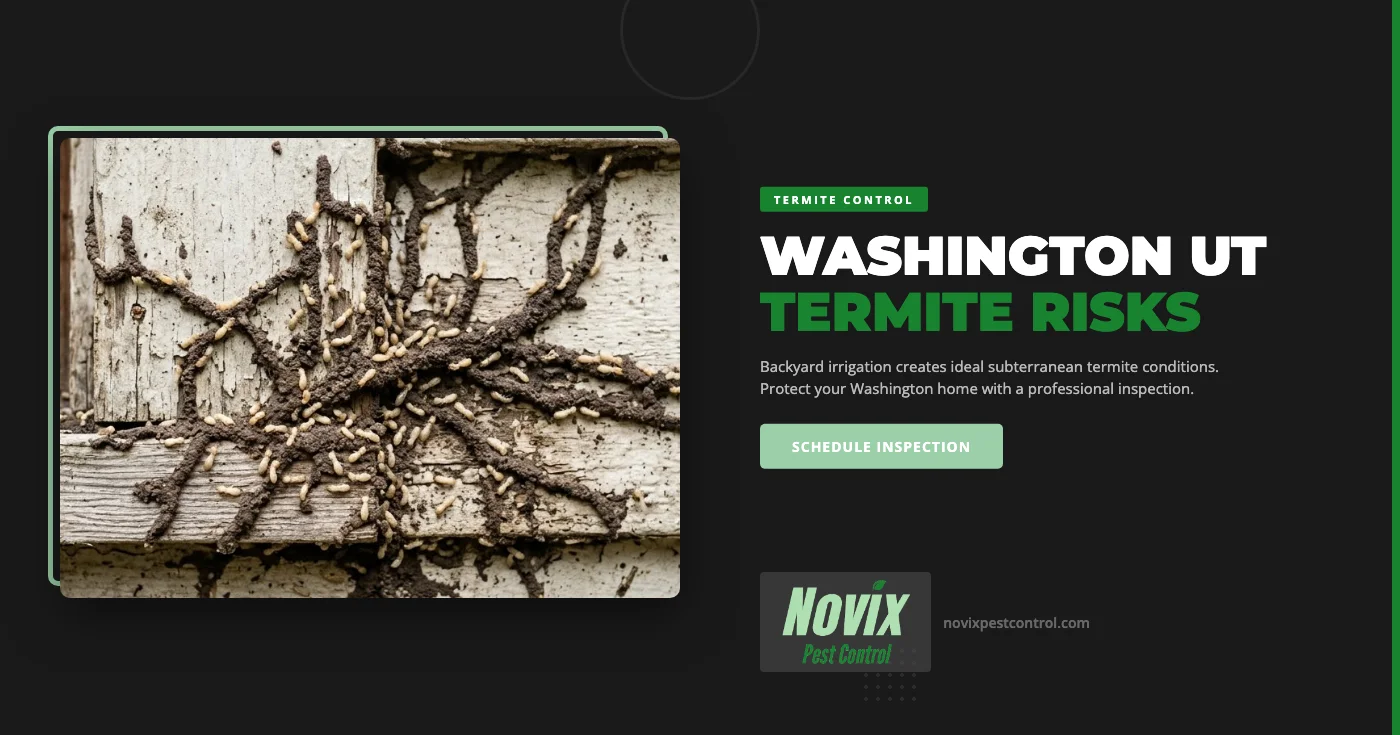
- Mud tubes — pencil-thin tunnels of dirt running up foundation walls, pier blocks, or interior crawlspace surfaces.
- Discarded wings near windows, sliding doors, or porch lights, especially in spring after a warm rain — a sign that a colony has released swarmers from somewhere nearby.
- Wood that sounds hollow when tapped along baseboards, door frames, or exterior trim.
- Blistered or bubbling paint on trim and siding, which can look like water damage but is sometimes caused by termites tunneling just below the surface.
- Tight-fitting doors and windows that suddenly stick, particularly in rooms with exterior walls.
- Damp, earthy smell in a closet, pantry, or laundry room without a clear plumbing source.
None of these on their own confirms an infestation, but two or more in the same area of your home is a clear signal to call our team and schedule a focused termite inspection.
Why Annual Termite Inspections Matter Even in Desert Climates
One of the most common misunderstandings we run into in our service area is the assumption that desert climates don't need regular termite checks. The data tells a different story. The arid-land subterranean termite has been documented across southern Utah by university entomologists for decades, and the species is specifically built to handle our soil profile, our sun, and our temperature swings. As long as a home has irrigated landscaping nearby, a termite colony has everything it needs to settle in quietly.
Annual washington utah termite inspection visits give us a chance to catch the early stages — fresh mud tubes, soft baseboards, a damp foundation corner — before they turn into structural repairs. For homeowners who are buying, selling, or refinancing, a current inspection on file also makes the transaction smoother and gives buyers real peace of mind about what they're walking into.
Smart Irrigation and Landscaping Habits That Lower Termite Risk
The good news is that smart irrigation choices can dramatically reduce the pressure subterranean termites put on a Washington home, without forcing you to give up the landscape you want. Here are the practical habits we share with our customers:
- Aim sprinklers away from the foundation. Keep a dry zone of at least 12 to 18 inches between the closest spray and the exterior wall whenever possible.
- Use gravel or rock borders against the house. A two-foot strip of pea gravel or decorative rock around the foundation discourages mud tubes and lets the soil dry out between waterings.
- Pull mulch back from siding and stucco. Keep at least six inches of bare separation between mulch and any wood, stucco, or foam board on the structure, as USU Extension recommends.
- Repair leaks quickly. Underground sprinkler leaks, dripping hose bibs, and clogged gutters all add chronic moisture in areas termites look for.
- Trim vegetation away from the home. Bushes, vines, and tree branches touching the structure create shaded, humid microclimates that termites love.
- Time irrigation for morning hours. Watering early lets the soil surface dry during the day rather than staying damp overnight.
These changes don't replace professional desert termite prevention st george area service, but they do meaningfully shift the odds in your favor between inspections.
What a Novix Termite Inspection and Treatment Looks Like
When a Washington homeowner calls our team about a possible termite issue, the first thing we do is schedule an on-site inspection. One of our licensed technicians walks the full exterior and interior of the home, paying close attention to the spots irrigation touches the structure: foundation seams, garage thresholds, crawlspaces, plumbing penetrations, and wood-to-soil contact points. We document any mud tubes, damaged wood, or moisture concerns with photos so you can see exactly what we're seeing.
If we confirm subterranean termite activity, we put together a written treatment plan tailored to the home. That typically involves a liquid termiticide barrier applied along the foundation, targeted treatment of any active galleries, and a recommended follow-up schedule. For homes without active termites but with high-risk irrigation conditions, we often recommend a preventive perimeter treatment combined with seasonal monitoring. You can read more about how this works on our Termite Treatment page, or contact our team to set up an inspection at your Washington, UT property.
Frequently Asked Questions
Do subterranean termites really live in Washington, UT despite the dry climate?
Yes. The arid-land subterranean termite is well documented across southern Utah by Utah State University Extension. It survives by tunneling deep into the soil to reach moisture and then traveling up through mud tubes to feed on wood. Irrigated yards, leaky plumbing, and shaded foundation areas make Washington homes accessible to colonies that would otherwise have to work much harder.
How does irrigation attract termites in southern Utah?
Subterranean termites need consistent moisture to live. Daily irrigation — especially drip lines, lawn sprinklers, and overspray near the foundation — keeps the top several inches of soil damp year-round. That removes the main natural barrier that would otherwise keep colonies far below the surface, and it puts the termites within easy reach of your home's framing and exterior trim.
How often should I have my Washington home inspected for termites?
We generally recommend an annual termite inspection for homes in our service area, with a more frequent check if your property has heavy landscaping, decorative water features, or older wood siding and trim. If you're buying or selling a home, a current inspection report is one of the best ways to protect both sides of the transaction.
What should I do if I think I've found mud tubes on my foundation?
Leave them in place if you can. Knocking them down doesn't end the infestation — it just makes it harder for our technician to confirm whether the colony is still active. Take a few photos, note where you saw them, and call us to schedule an inspection so we can evaluate the situation and recommend the right next step.