
Cockroach Control in St. George, UT: Why Monsoon Rains Push Cockroaches Into Your Kitchen
Cockroach Control in St. George, UT: Why Monsoon Rains Push Cockroaches Into Your Kitchen
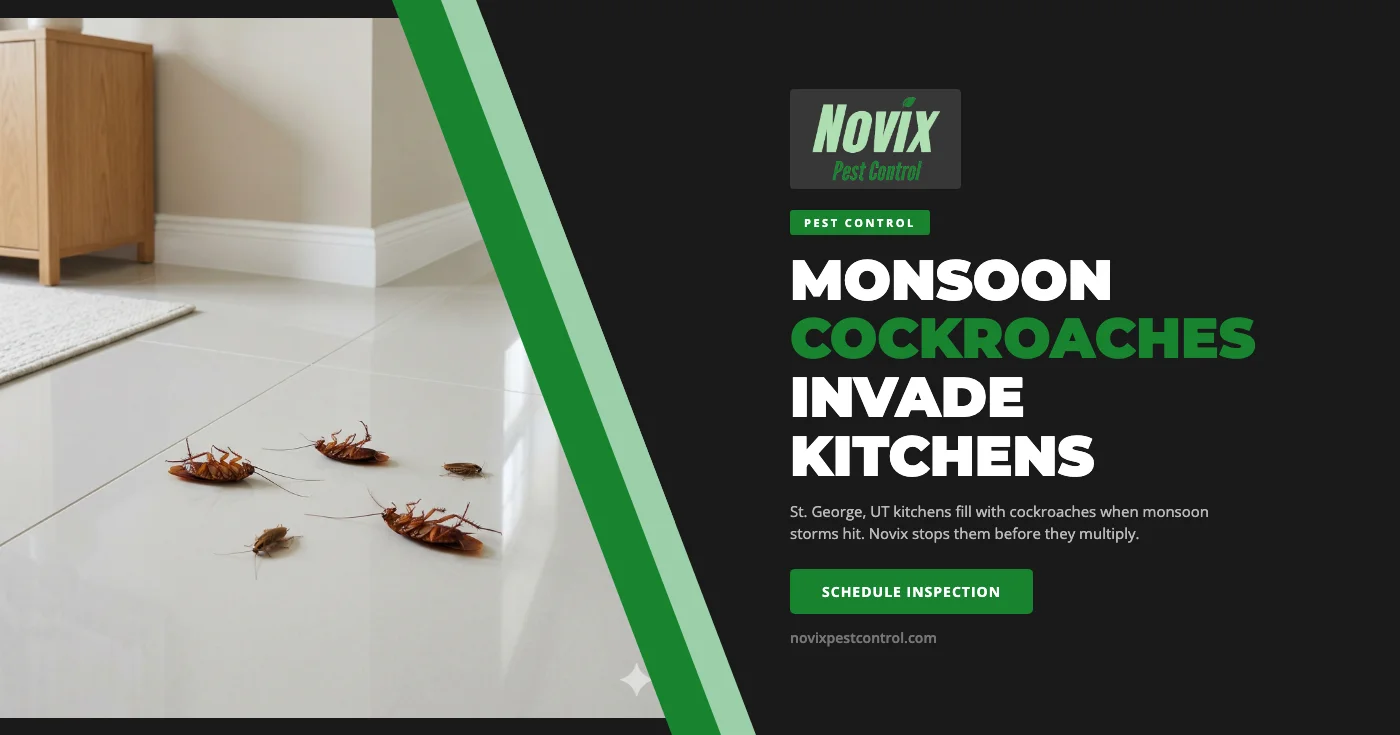
Every summer in St. George, UT, our phones start ringing about the same problem: cockroaches in the kitchen. It happens after the first big monsoon storms of the season, and the pattern is consistent enough that we can nearly set a calendar by it. When southern Utah's summer monsoon pattern arrives — typically mid-July through August — cockroaches that had been surviving outdoors get pushed out of their harborage areas and start hunting for cooler, drier shelter. Your air-conditioned kitchen fits the bill perfectly.
At Novix Pest Control, we provide professional cockroach control in St. George, UT and throughout Washington County. We've handled monsoon-season cockroach calls in nearly every neighborhood in the area, and we know how quickly a few sightings can escalate into a full infestation once the summer rains begin. Here's what every St. George homeowner should understand about why cockroaches appear during monsoon season, which species show up in local homes, and how to keep them out.
Why Monsoon Season Sparks Cockroach Activity in St. George
The North American monsoon pattern brings a distinct shift to St. George's weather each summer. Beginning in early July, moisture from the Gulf of California and the Gulf of Mexico pushes into southern Utah, producing the afternoon thunderstorms, flash-flood potential, and elevated humidity that define the region's late-summer climate. According to National Weather Service data, monsoon activity typically peaks between mid-July and mid-September in Washington County.
For cockroaches, that shift is transformative. Utah State University Extension notes that cockroaches thrive in warm, moist environments — and during monsoon season, both conditions intensify at once. Outdoor humidity climbs, standing water pools in yards and gutters, and cockroaches that had been surviving in mulch beds, wood piles, and irrigation boxes get pushed toward higher-quality shelter. That shelter is almost always your home.
Once inside, cockroaches don't just take shelter — they multiply. Warm summer conditions accelerate reproduction cycles dramatically. A single female German cockroach can produce 300 to 400 offspring during her lifetime, and under favorable conditions, a population can complete an entire life cycle in as little as 45 days. That's how a handful of cockroaches spotted in early July can turn into a serious infestation by mid-August if left untreated. When homeowners ask us why they suddenly have cockroaches after years without seeing any, monsoon-driven population pressure is almost always the answer.
Common Cockroach Species Found in Southern Utah Homes
Not every cockroach behaves the same way, and identifying which species has entered your home is a key part of an effective treatment plan. In St. George and the surrounding communities of Washington County, four desert cockroach species are the most common problem for homeowners:
German Cockroach — The most common indoor cockroach in the United States and by far the most difficult to eliminate. Light brown with two dark stripes running behind the head, German cockroaches are relatively small (about half an inch long) and reproduce faster than any other species we handle. They're strongly tied to kitchens and bathrooms, and they've developed resistance to many over-the-counter pesticides. Professional treatment is essential for this species.
American Cockroach — The largest of the four common species at 1.5 to 2 inches long, reddish-brown with a distinctive yellow figure-eight pattern behind the head. American cockroaches usually enter from outdoors through drains, sewer connections, and foundation gaps. They favor damp, warm areas — basements, laundry rooms, and under-sink cabinets are typical harborage points.
Oriental Cockroach — Dark brown to nearly black, oriental cockroaches are sometimes called "water bugs" because of their preference for cool, moist environments. During monsoon season, they're frequently pushed indoors from outdoor drainage areas and are commonly found in lower parts of the home, including crawl spaces and utility rooms. Oriental cockroaches produce a distinct musty odor that many homeowners notice before they see the insects themselves.
Brown-Banded Cockroach — Smaller than American cockroaches and less moisture-dependent than German cockroaches, brown-banded cockroaches spread throughout a home rather than concentrating in kitchens and bathrooms. They frequently hide in electronics, inside upholstered furniture, and behind picture frames. Because they scatter widely, brown-banded infestations often call for the most comprehensive treatment approach.
Kitchens and Bathrooms: Where Cockroaches Hide First
When cockroaches enter a home during monsoon season, they don't move in randomly. They gravitate toward the areas that offer what they need most: consistent warmth, ambient moisture, food access, and dark, sheltered harborage. For most St. George homes, that means kitchens and bathrooms are the first rooms colonized.
Under and Behind Appliances — The narrow gaps beneath refrigerators, dishwashers, and ranges combine warmth from the motors with food debris, moisture from condensation, and near-total darkness. This is one of the first places we inspect during a cockroach service call.
Cabinet Cracks and Corners — Kitchen cabinets — particularly the seams where cabinet backs meet the wall or where drawer runners attach — provide small, dark spaces cockroaches use as harborage. Pantry shelves with any moisture, from a small leak or humidity buildup, are especially attractive.
Around Sinks and Plumbing — The under-sink cabinet is a top harborage area in both kitchens and bathrooms. Slow-dripping traps, condensation on cold-water pipes, and gaps around drain lines create ideal conditions. Cockroaches also enter through plumbing penetrations from crawl spaces and adjacent walls.
Bathroom Fixtures — Behind toilets, inside vanity cabinets, and around bathtub or shower access panels are all common harborage points, especially for oriental cockroaches. The consistent moisture and warm air in bathrooms make these zones particularly attractive during summer.
Wall Voids and Utility Penetrations — Cockroaches use the hollow spaces inside walls to travel between rooms, following plumbing, electrical conduit, and HVAC ducting. This is one reason a cockroach problem that appears to start in the kitchen can quickly spread to bathrooms, laundry rooms, and other parts of the home.
Health Risks of a Cockroach Infestation
Cockroaches are not just a nuisance. Both the Environmental Protection Agency (EPA) and public health researchers have documented significant health concerns tied to indoor cockroach populations, and those risks are particularly important for families with children or anyone with respiratory conditions.
Asthma and Allergen Exposure — Cockroach proteins found in shed skins, feces, saliva, and body fragments are among the most significant indoor allergens identified by the EPA. According to EPA data, cockroach allergens have been detected in more than 60% of U.S. homes, and exposure has been linked directly to increased asthma symptoms — particularly in children. A landmark study published in the New England Journal of Medicine found that children exposed to high levels of cockroach allergen at home had more than three times the asthma hospitalization rate of children without that exposure.
Bacterial Contamination — Cockroaches travel through drains, sewers, and garbage before entering food-preparation areas. As they move across counters, cutting boards, and pantry contents, they transfer bacteria. The EPA specifically notes that cockroaches can carry Salmonella, Staphylococcus, and E. coli — pathogens directly linked to foodborne illness.
Ongoing Allergen Persistence — Even after cockroaches are eliminated from a home, allergen levels can remain elevated for months. Allergen particles are small enough to remain airborne for hours after being disturbed by foot traffic, cleaning, or HVAC circulation. That's part of why professional treatment focused on both eliminating the population and reducing residual allergen sources matters.
Cockroach Prevention Tips for St. George Homeowners
Preventing cockroaches from establishing an indoor population is far easier than eliminating an active infestation. These are the steps we consistently recommend to St. George homeowners heading into monsoon season:
Seal entry points — Inspect the exterior of your home for gaps around door thresholds, utility penetrations (where cable, electrical, and water lines enter the house), and cracks in stucco or foundation. Cockroaches can squeeze through openings as small as 1/16 of an inch. Silicone caulk, weatherstripping, and door sweeps significantly reduce entry.
Eliminate moisture sources — Fix dripping faucets and running toilets promptly. Check under sinks for slow leaks. Make sure irrigation systems aren't creating standing water against the foundation. During monsoon season, keep gutters and downspouts clear so water drains away from the house rather than pooling near entry points.
Manage food storage — Transfer dry goods from cardboard boxes into airtight plastic or glass containers. Clean up crumbs and spills promptly, wipe down counters at the end of each day, and don't leave dirty dishes overnight. Pet food left out in bowls is a frequent food source that homeowners often overlook.
Reduce clutter and cardboard — Cockroaches feed on the glue in cardboard boxes and nest inside stacked storage. Switch to plastic bins for garage, pantry, and closet storage where possible, and break down and dispose of shipping boxes promptly.
Clean under and behind appliances — Pull out the refrigerator and range annually and clean the floor and back panels. Wipe down the exterior of dishwashers and check under-appliance drip trays. These areas accumulate food and moisture that draw cockroaches in.
Inspect what comes into your home — Cockroaches hitchhike inside cardboard shipping boxes, secondhand furniture and appliances, and grocery bags. Inspect items before bringing them inside, particularly during monsoon season when cockroach activity is highest.
How Novix Pest Control Eliminates Cockroaches for Good
When prevention isn't enough and cockroaches have already established a foothold in your home, professional treatment is the most effective path forward. Over-the-counter sprays are often counterproductive with cockroaches — repellent products can scatter the population into wall voids and untreated areas of the home, making the infestation harder to eliminate rather than resolving it.
Our approach to cockroach control in St. George, UT is built around what actually works against monsoon-season populations:
Thorough Inspection — We identify the species present, locate active harborage areas, and map entry routes. A German cockroach infestation calls for different treatment tools than an oriental cockroach infestation, and knowing which species you're dealing with directly shapes the plan.
Targeted Baiting — Professional-grade baits contain slow-acting active ingredients that cockroaches carry back to harborage and share with other members of the population through normal social behaviors. This is one of the most effective treatments available for German cockroach infestations in particular.
Non-Repellent Applications — In addition to bait, we use non-repellent formulations that cockroaches don't detect and avoid. Applied to cracks, crevices, and harborage points, these products create a residual effect without scattering the population.
Entry Point Sealing Guidance — Eliminating the current population isn't enough if new cockroaches can walk in through the same gaps. We identify and recommend fixes for the specific entry points cockroaches are using around your home.
Follow-Up Service — For established infestations, we schedule follow-up visits to confirm that populations have been fully reduced and to reapply targeted treatment where needed. Our goal is not just a short-term reduction but full elimination.
If you're noticing cockroaches in your St. George, UT home this monsoon season, don't wait for the population to expand before addressing it. Contact Novix Pest Control for a professional inspection and to learn more about our cockroach control options for homes throughout St. George and Washington County.