Termite Swarm Season in Ivins, UT - What Homeowners Should Know | Novix Pest Control
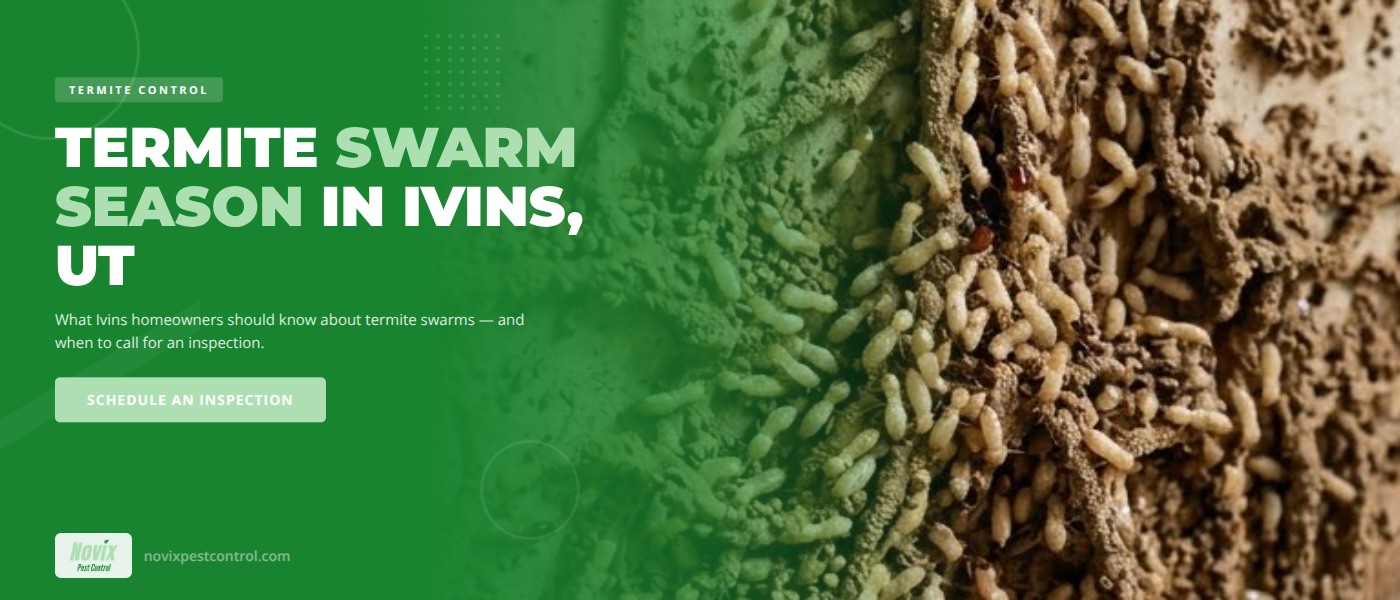
Termite Swarm Season in Ivins, UT - What Homeowners Should Know | Novix Pest Control
Every spring in Ivins, UT, homeowners may notice something alarming: swarms of winged insects emerging from the soil around their foundation, gathering near windows, or clustering around outdoor lighting. These are termite swarmers, and their appearance is one of the most significant warning signs that a termite colony is active on or near your property. At Novix Pest Control, we help homeowners across Southwestern Utah understand what termite swarm season means, how to identify the signs, and what steps to take to protect their homes from costly damage.
Termite swarm season in the Ivins, UT area typically begins in the spring, triggered by warming temperatures and rainfall. While many homeowners assume that Utah's dry desert climate makes termite infestations unlikely, the reality is quite different. Subterranean termites are well established in Washington County, and the combination of irrigated landscaping, warm soil temperatures, and proximity to the red rock terrain creates conditions that are surprisingly favorable for termite activity.
What Is Termite Swarm Season in Ivins, UT?
Termite swarming is the reproductive phase of a termite colony's life cycle. When a colony matures, it produces winged reproductive termites called alates, or swarmers. These swarmers leave the established colony in large groups, typically on warm days following a spring rain, with the goal of mating and establishing new colonies.
In Ivins and the broader Southwestern Utah region, termite swarms most commonly occur between March and June, though the exact timing varies depending on temperature and moisture conditions. Swarmers are often mistaken for flying ants, but there are important differences. Termite swarmers have straight antennae, a broad waist, and two pairs of wings that are equal in length. Flying ants, by contrast, have elbowed antennae, a pinched waist, and wings of unequal length.
The presence of swarmers is significant because it indicates that a mature colony, often containing hundreds of thousands of individual termites, exists nearby. Colonies typically need three to five years of growth before they produce swarmers, which means the underlying infestation may have been present for years before homeowners ever notice visible signs.
Why Ivins, UT Homes Are at Risk for Termite Infestations
Many Ivins homeowners are surprised to learn that their desert properties are vulnerable to termites. The misconception that termites only thrive in wet, humid climates has led many residents to overlook termite prevention entirely. However, subterranean termites, the dominant species in Southwestern Utah, have adapted well to arid environments by building extensive underground tunnel systems that allow them to access moisture deep in the soil.
Several factors specific to Ivins and the surrounding area increase termite risk for local homeowners:
- Irrigated landscaping: Drip irrigation systems, sprinklers, and overwatered garden beds create pockets of moisture near your foundation that attract subterranean termites. The contrast between dry desert soil and irrigated zones around homes creates ideal conditions for colony establishment.
- Warm soil temperatures: Ivins enjoys warmer average temperatures than much of Utah, which allows termites to remain active for a longer portion of the year. While termites in northern Utah may slow down significantly during winter, colonies in Washington County can continue feeding and growing throughout most of the year.
- Construction materials: Many homes in the Ivins area feature wood framing, wooden trim, and landscaping ties or retaining walls made from treated lumber. Even pressure-treated wood can become vulnerable over time as the chemical treatment breaks down.
- Soil conditions: The sandy, well-draining soils common in the Ivins area allow subterranean termites to build extensive tunnel networks with relative ease. These tunnels can extend 100 feet or more from the main colony, reaching homes that seem far removed from any obvious termite habitat.
Signs of Termite Activity Ivins, UT Homeowners Should Watch For
Early detection is the key to minimizing termite damage. Unfortunately, termites are often called the "silent destroyers" because they can feed on the structural wood of your home for years without producing any obvious external signs. However, there are several indicators that we encourage Ivins homeowners to watch for, especially during swarm season.
Mud Tubes
Subterranean termites build pencil-thin mud tubes along foundations, basement walls, and crawl spaces. These tubes are made from soil, wood particles, and termite saliva, and they serve as protected highways that allow termites to travel between their underground colony and the wood in your home. If you see mud tubes on your foundation, it is a strong indicator of an active infestation.
Discarded Wings
After termite swarmers land and pair off to start new colonies, they shed their wings. Finding piles of small, translucent wings near windowsills, doorways, or along the foundation is one of the most common signs of a recent swarm. These wings are often the first visible evidence that termites are present on your property.
Hollow or Damaged Wood
Tap on wooden structures around your home, including baseboards, door frames, window frames, and support beams. If the wood sounds hollow or feels soft when pressed, termites may have been feeding on the interior. Blistering or bubbling paint on wood surfaces can also indicate termite damage just below the surface.
Frass
While frass, or termite droppings, is more commonly associated with drywood termites, it can occasionally be found near infested wood in Southwestern Utah homes. Frass looks like small, dark pellets resembling sawdust or coffee grounds and is typically found in small piles near kick-out holes in infested wood.
Indoor vs. Outdoor Termite Swarms - What It Means for Your Ivins, UT Home
The location of a termite swarm can tell you a lot about the severity of the situation. If you notice termite swarmers outdoors, near landscaping, tree stumps, or woodpiles, it means a colony is present in the area, but it does not necessarily mean your home is infested. However, an outdoor swarm near your foundation should be treated as a serious warning sign.
If termite swarmers appear inside your home, emerging from walls, ceilings, or around window frames, it is a strong indicator that an active colony has already established itself within or directly beneath your home's structure. Indoor swarms require immediate professional attention, as they typically mean termites have been feeding on your home's wood for an extended period.
Regardless of where you see swarmers, we recommend scheduling a professional termite inspection as soon as possible. Our team uses specialized equipment and training to locate colonies and assess the extent of any damage that may have already occurred.
How We Protect Ivins, UT Homes from Termite Damage
At Novix Pest Control, we take a thorough, multi-step approach to termite control that begins with a detailed inspection and extends through treatment and ongoing monitoring. Our goal is not just to eliminate existing termite activity but to create long-term protection that prevents future infestations.
Professional Termite Inspections
Our inspections cover the entire property, including the foundation, crawl spaces, attic, garage, and all accessible wood structures. We look for mud tubes, wood damage, moisture issues, and other conditions that could contribute to termite problems. We also evaluate landscaping, irrigation systems, and soil conditions to identify risk factors specific to your Ivins property.
Targeted Termite Treatments
Depending on the type and extent of the infestation, we may recommend liquid barrier treatments, bait station systems, or a combination of both. Liquid treatments create a treated zone in the soil around your foundation that eliminates termites as they attempt to enter your home. Bait stations attract foraging termites and deliver a slow-acting product that is carried back to the colony, eventually eliminating the entire colony from within.
Prevention and Monitoring
We help Ivins homeowners implement preventive measures that reduce the risk of future termite infestations. This includes recommendations for managing irrigation to keep moisture away from foundations, removing wood-to-soil contact around the perimeter of your home, and scheduling annual termite inspections to catch any new activity early.
Frequently Asked Questions About Termite Swarms in Ivins, UT
When does termite swarm season start in Ivins, UT?
Termite swarm season in Ivins typically begins in March or April and can continue into June, depending on weather conditions. Swarms are most commonly triggered by warm temperatures combined with spring rainfall. However, termite colonies remain active year-round in Southwestern Utah, so the absence of swarmers does not mean your property is termite-free.
Can termites survive in Utah's dry desert climate?
Yes. Subterranean termites in Ivins and throughout Washington County have adapted to the desert environment by building deep underground tunnel systems that access moisture below the surface. Irrigated landscaping, leaky pipes, and poor drainage around foundations also create the moisture termites need to thrive, even in an otherwise arid climate.
How much damage can termites cause to an Ivins, UT home?
Termites cause billions of dollars in property damage across the United States every year, and individual homes can sustain thousands of dollars in structural damage before the problem is detected. Because termites feed from the inside out, the exterior of wood structures may look perfectly normal while the interior has been hollowed out. Annual inspections are the most effective way to catch damage early and minimize repair costs.
Should I get a termite inspection even if I have not seen swarmers?
Absolutely. Termite swarmers are only one sign of an infestation, and many active colonies never produce visible swarms near the home. We recommend annual termite inspections for all Ivins homeowners, regardless of whether you have seen any signs of termite activity. Early detection is the most cost-effective approach to termite management.
What is the difference between termite swarmers and flying ants in Ivins, UT?
Termite swarmers and flying ants are frequently confused, but they can be distinguished by several physical characteristics. Termite swarmers have straight, beaded antennae, a thick waist with no constriction, and two pairs of wings that are equal in size. Flying ants have elbowed antennae, a clearly pinched waist, and front wings that are larger than the hind wings. If you are unsure which pest you are seeing, we can provide a free identification during an inspection.
Protect Your Ivins, UT Home During Termite Swarm Season
Termite swarm season is a critical reminder for Ivins homeowners to take termite threats seriously. Whether you have noticed swarmers around your property, discovered mud tubes along your foundation, or simply want peace of mind knowing your home is protected, our team is here to help.
We proudly serve homeowners in Ivins, St. George, Washington, Santa Clara, Leeds, and communities throughout Southwestern Utah. Our experienced technicians understand the unique termite challenges that desert living presents, and we deliver effective, reliable solutions tailored to your property.
Contact us today to schedule a professional termite inspection and protect your Ivins, UT home from termite damage this spring and beyond.